Excavation
Excavation for footings, foundations, basements and building pads across the Springfield area and the southern Missouri Ozarks. We look at the site and put the quote in writing.
Learn More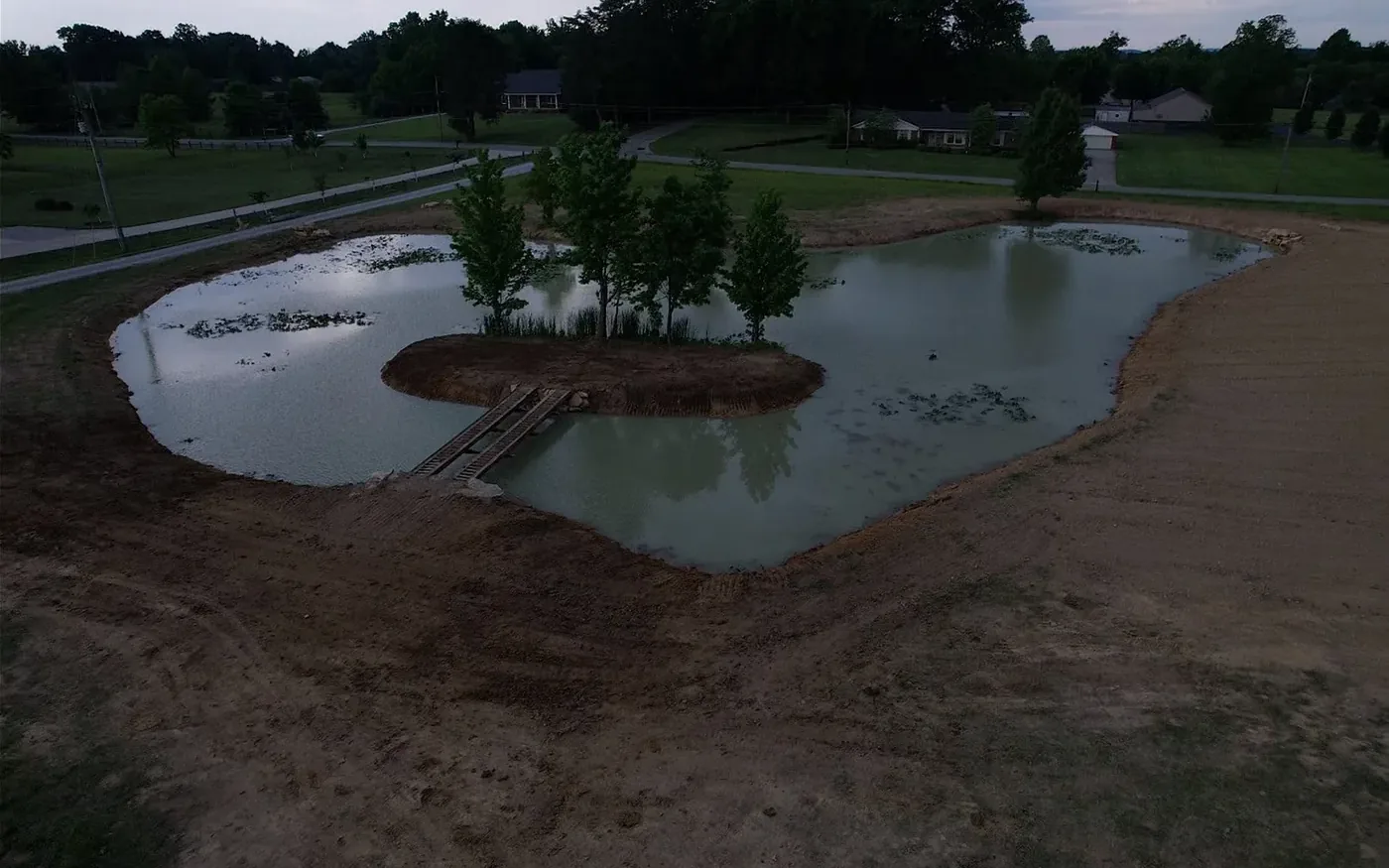
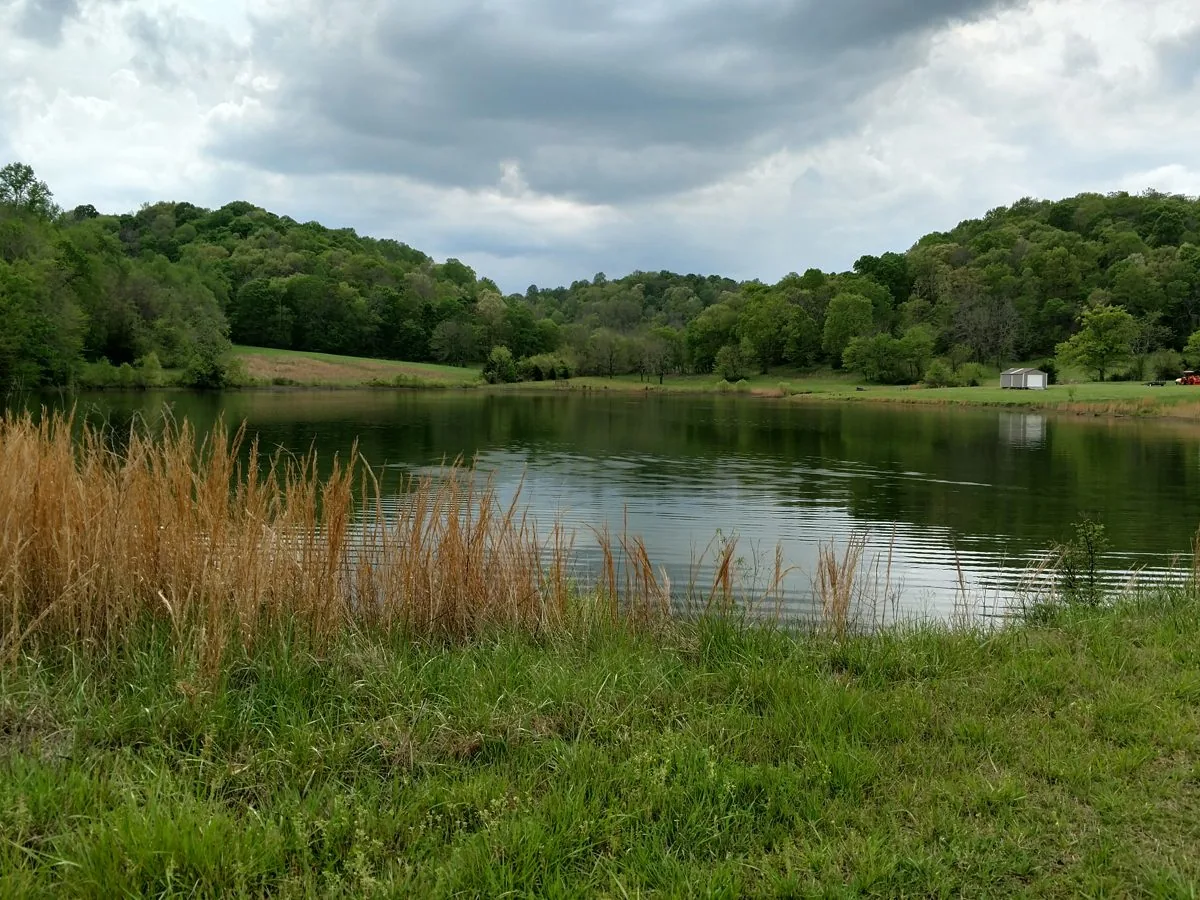
Pond construction gives a farm or a piece of country ground its own water. We build new ponds and dams for stock water and recreation in the Springfield area and the southern Missouri Ozarks. Each job starts with a look at the soil, because clay holds the water.
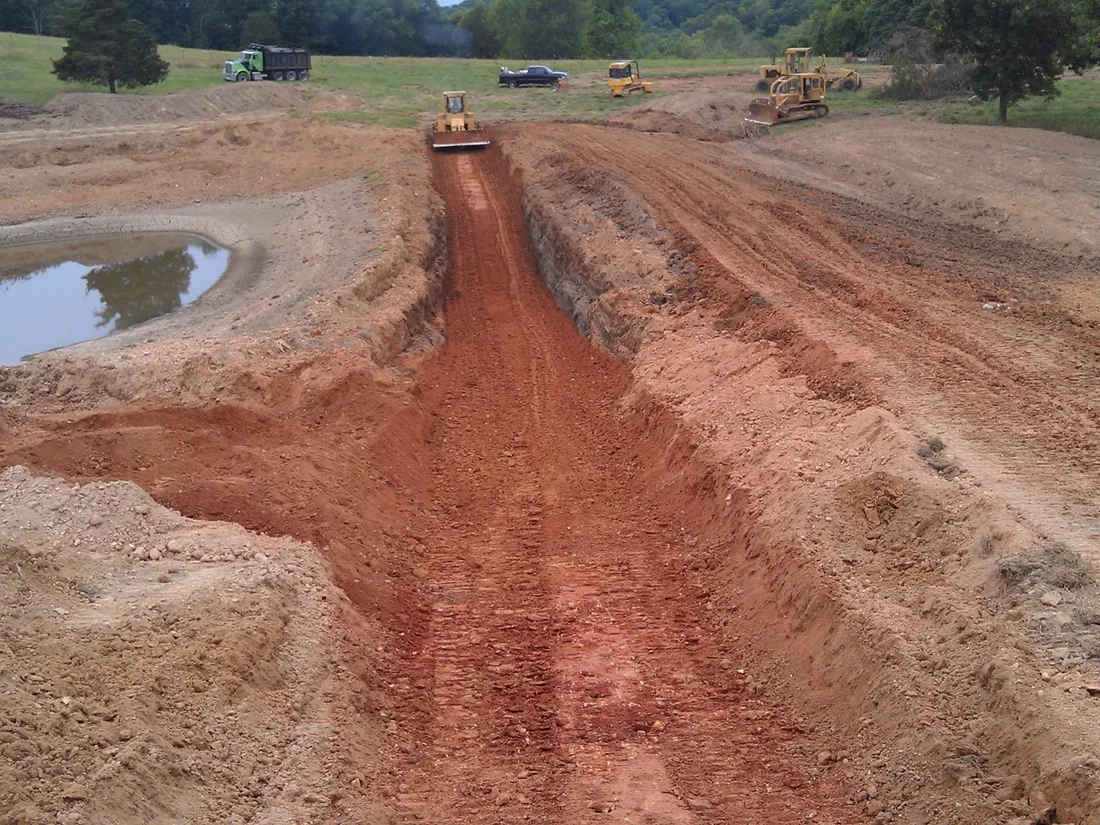
Erosion control and road stabilization is the trade this company grew out of. That matters on a pond, because a dam is packed soil that has to hold its shape through hard rains. Pond digging is heavy excavation work, and a bulldozer moves the ground.
Tell us about the job and where the land is. We look at it and put the quote in writing.
The ideal pond site is a low area or wide draw that narrows on the downhill side. That shape lets the smallest dam hold back the most water, says the Missouri Department of Conservation. Enough soil to build the dam has to be on the site or very near.
The Ozarks add a catch. Much of the region sits on limestone and dolomite, rock that water slowly dissolves. That is how sinkholes form, and the Missouri Department of Natural Resources counts more than 16,000 known ones statewide.
The Missouri Department of Conservation's Missouri Pond Handbook says to skip sites with springs or sinkholes, since they may leak. Rocky ground can also hide open cracks in the bedrock. The handbook warns that a badly built pond over cracked rock may be an expensive dry hole. That risk is why the soil gets a close look before any pond digging starts.
If the pond site sits in timber, clearing it first is land clearing work. Building the dam starts by stripping its footprint to clean ground. Topsoil gets pushed aside and saved for the finished dam. Stumps and roots come out, since buried wood rots and opens a path for seeping water.
Next, a core trench runs along the center line of the dam. The Missouri Pond Handbook calls for it to reach solid rock or go at least 3 feet into tight subsoil. The best clay fills the trench and rises through the dam in thin, packed layers. Loosely packed dams may fail, the handbook warns.
For a dam under 20 feet tall, the handbook calls for a top at least 10 feet wide. That top should stand at least 3 feet above the planned water level. An earthen spillway carries heavy runoff in a thin sheet to a point below the dam. Until grass roots in, erosion mats hold the bare soil on the dam and spillway.
Before you pick a spot, check your deed. Easements for buried pipelines or power lines can change where the pond goes. Missouri law has the excavator notify Missouri 811 at least two working days before digging starts.
The Missouri Pond Handbook says a pond must not affect a public road or a neighbor. It also warns that turning a stream or wetland into a pond may be against the law. For that question, it sends owners to the U.S. Army Corps of Engineers.
The USDA Natural Resources Conservation Service offers technical help with pond design. Its local office can find an engineer or technician to survey the site and size the spillway. University of Missouri Extension notes that NRCS may also offer cost-share help. Bring that plan along when we look at the site, and the written quote follows it.
Call or text for a written quote. We work about 80 miles around Drury across the southern Missouri Ozarks.
(417) 259-2785From the first call or text to the finished work, here is how it goes.
Call or text (417) 259-2785, or send the form. Tell us where the land is and what you want done.
We come out and look at the ground and the way in for the machines. You tell us what the land is for.
The quote comes in writing and spells out the work. You decide with it in hand.
On the day we set, the machines go to work. The job follows the written quote.
The job ends with open ground ready for what comes next. Where we dig, the site is graded and left clean.
Common questions about pond construction around Springfield and the southern Missouri Ozarks. If yours is not here, call or text and ask.
Excavation for footings, foundations, basements and building pads across the Springfield area and the southern Missouri Ozarks. We look at the site and put the quote in writing.
Learn More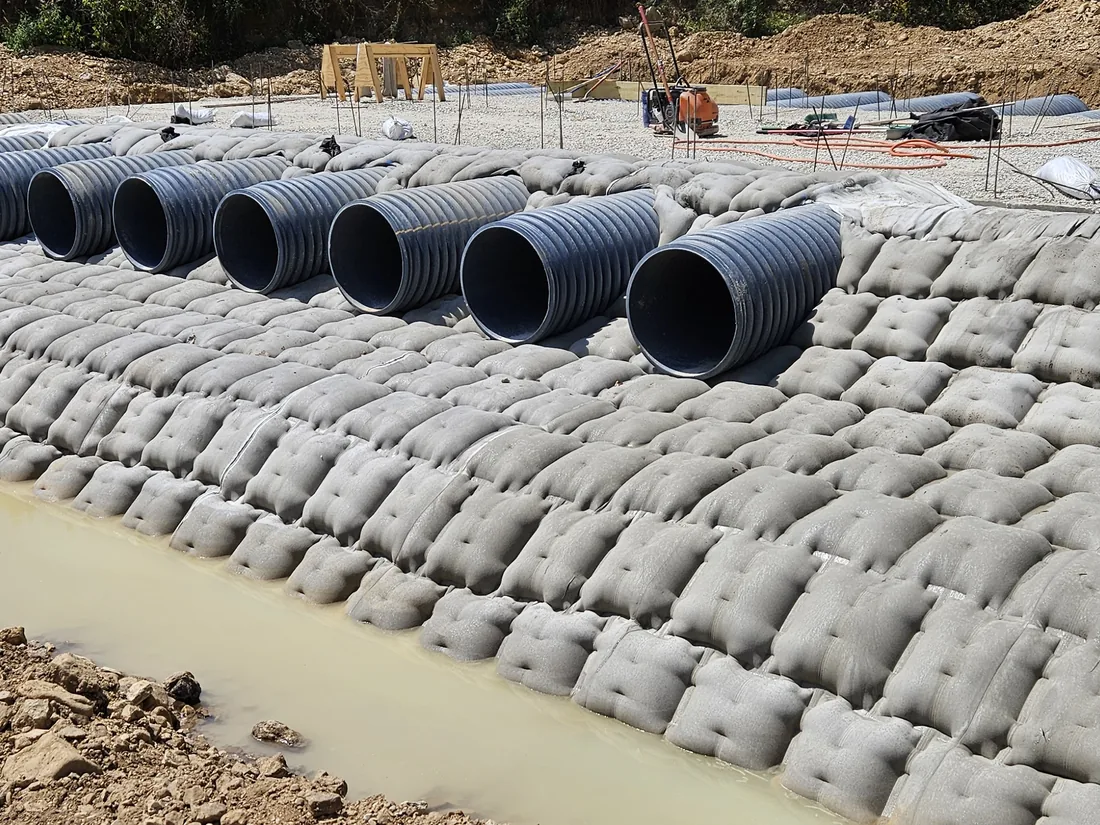
We lay erosion mats on bare slopes and cut banks, and we repair the washouts runoff leaves behind. The work starts with finding where the water comes from.
Learn More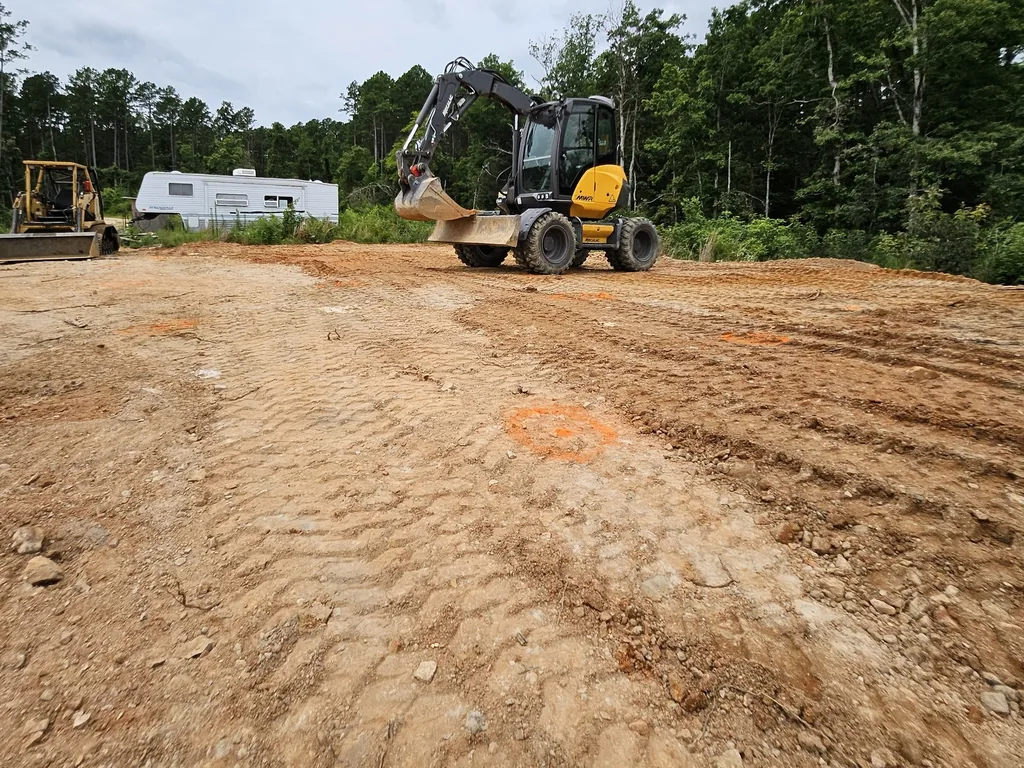
Rough and finish grading for house pads, shop sites, yards and drives. We shape the ground so rain runs away from what you build.
Learn MorePoint out the trees you want to keep, and we clear around them. The cedar and brush go, and your trees stay standing.
Erosion control and road stabilization is the trade this company grew out of. Slopes get erosion mats, and roads get shaped to shed water.
When the clearing is done, the excavation and concrete work can follow. You call or text the same number for both.
We look at the land before we price the job. The quote comes in writing, and the work starts when you approve it.
Call or text (417) 259-2785, or send the form, and tell us about the land or the job. We look at it first, and the quote comes in writing.
Tell us about the job and where the land is. We look at it and put the quote in writing.